
Why the Way We’ve Been Coaching is Outdated – An Introduction to the CLA, No Hesi Hoops’ Evidence-Based Development Approach
HOW A SCIENCE-BACKED APPROACH IS RESHAPING SKILL DEVELOPMENT AND REDEFINING WHAT IT MEANS TO BE 'SKILLED'
Why the Way We've Been Coaching is Outdated - An Introduction to the CLA, No Hesi Hoops' Evidence-Based Development Approach
What if I told you that the way we've been coaching is outdated? That there's a better way, one that helps athletes actually transfer what they're doing in workouts to the game, that could help reduce the dropout rate in youth sports, and that can help players be more adaptable, better problem solvers, and overall better players? This post introduces the unique development approach we use at No Hesi Hoops: the CLA, or the Constraints-Led Approach. This approach has been rapidly growing over the past decade and is very different from how we have traditionally approached skill development. It is based on and aligned with scientific research in human movement and skill acquisition, with a substantial body of research and empirical evidence supporting it. The CLA is fundamentally different from the way we've always done it and changes the way the game is viewed. Skill and skillful performance are viewed differently as well, shifting focus away from rehearsed techniques and towards adaptable problem-solving. It can be difficult at first to come to grips with, and as I said, it requires you to view the game in a completely different way. However, it has been shown to be highly effective and is the way the game is headed.
The CLA
So, what is the CLA? The Constraints-Led Approach, at its core, is about creating an environment for skills to emerge, rather than the coach explicitly telling athletes what to do. The environment is created through manipulating constraints - rules, space, defenders, or time for example - that guide athletes' behavior in each activity. It gets away from the idea of the one correct technique and instead focuses on creating an environment where athletes are guided towards potential solutions and techniques. It encourages exploration, problem-solving, and always puts skills in context. This recognizes that every athlete is different, and a good technique or solution for one athlete may be completely ineffective for another based on individual factors or constraints.
The Science: Traditional vs Modern Coaching
The CLA is evidence-based and is aligned with modern movement science. The traditional approach to skill development breaks down scripted techniques out of context into individual components, where they are practiced according to the "correct" technique, and then assembled back together to be put in context later. This traditional approach is generally based on the Information Processing theory (IP), which has existed since the 1960s. Under the IP, the brain functions as the executive controller, making decisions and sending instructions to the body on how to move. This is where concepts such as muscle memory come from, and why we see so much on-air or 1-on-0 practicing. The brain is compared to a computer with the ability to store movement patterns and select the appropriate technique at the right time in the game. This can be thought of as a see-decide-act model for movement. The brain sees the situation, decides on a movement from a stored set of options, and then sends instructions for the body to act on it. The CLA is instead underpinned by Ecological Dynamics. Ecological Dynamics studies the relationship between humans and their environment. It accounts for how movements actually happen, as well as how we pick up information from our environment to regulate those movements. Movements emerge as a result of whats called Self-Organization, which is essentially the opposite of Information Processing theory. Instead of the brain controlling movements, the body self-organizes its individual components (bones, joints, muscles, etc) to produce movements without the brain. These movements emerge based on the environment and account for individual movements, as well as how teams move together. Players pick up information from their environment (space, where the defenders are, where their teammates are, audio cues, etc) and their body then self-organizes into movements to satisfy the constraints of the situation. This is where constraints come into play. Constraints, rather than being limiting factors, are instead information sources that shape how players move. These can be anything from individual factors like strength, speed, fatigue, or mood, environmental factors like lighting, playing surface, or crowd noise, to task-specific factors like rules, time, score, boundaries, etc. All these things are constantly shaping how players self-organize into different movement patterns and account for how skills actually emerge. Under self-organization, we also see that movements vary depending on the situation, and no two movements, whether its a shot, layup, or dribble move, ever look exactly the same. The best players in the world consistently achieve the same outcomes with different movement techniques or solutions. So, what does this mean? First off, it means that, as opposed to practicing a specific technique in isolation to apply it in-game later, we always put skills in context. Movements emerge as a result of the environment and our bodies instinctively acting based on the situation. This leads to the concept of Perception-Action Coupling, which means that our perception of the environment and our actions are not separate processes but are instead coupled together. So, when we decouple perception and action with on-air or 1-on-0 drills, we are losing half of what creates the movements in the first place. When we remove defenders, teammates, and context, players stop learning how to read the game. They get good at drills, but not basketball. Second, this means that rather than trying to train the one "correct" technique, the focus is instead on finding a functional solution for each given situation. No two shots, finishes, or possessions are ever the same, so why would we train one technique that will rarely actually be used? Instead, we look to develop adaptable players that can achieve the same outcomes with different techniques. We then look at basketball as more of a problem-solving activity and develop players to be great problem solvers. Finally, this means that skill is redefined into a more concrete definition. If you asked most people to define skill, you would likely get many different answers. Many of them would come back to the ability to execute specific techniques. Skill and skillful performance are instead defined as the ability to adapt to different situations and find effective movement solutions to satisfy the constraints of the situation.
The Difference for Players
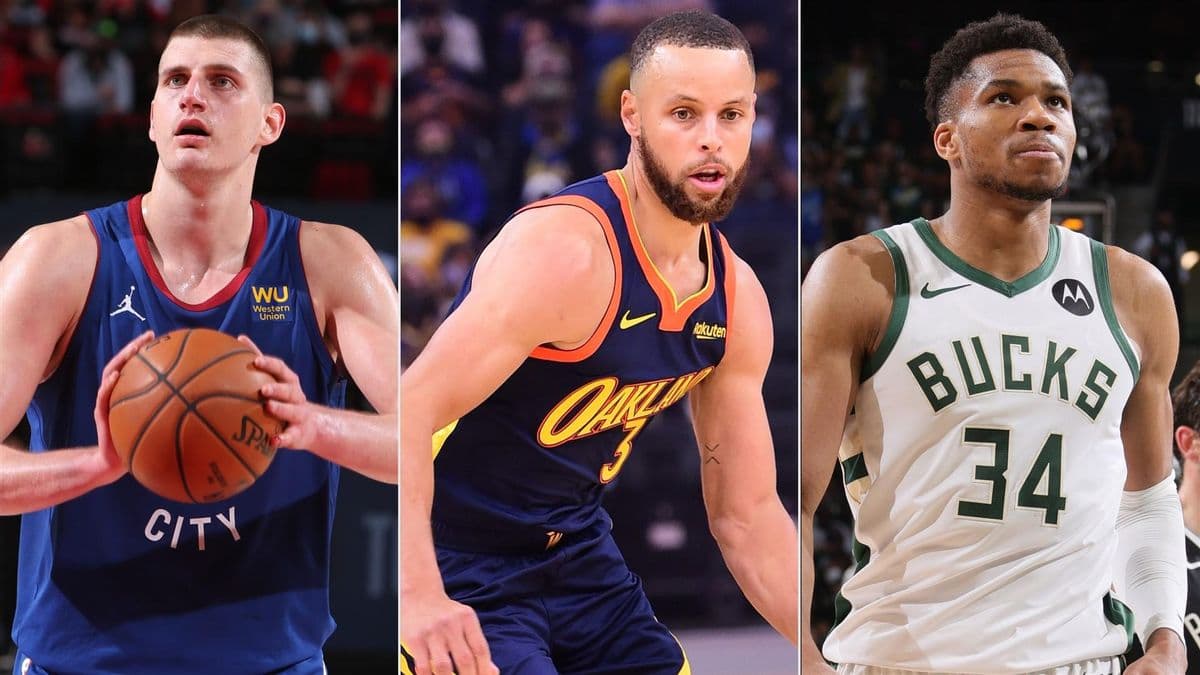
This definition is consistent with the best players in the world as well. What do Steph Curry, Giannis Antetokounmpo, and Nikola Jokic all have in common? Yes, they're all great players, NBA Champions, and future Hall of Famers. But one major quality all these players share is the ability to adapt and solve problems at an elite level. While they are all very different players, they are all highly adaptable and excel in whatever situation they are put into. They all accomplish this in very different ways, unique to their individual skill set and physical capabilities. This is, in fact, one of the most observable differences in the best players on virtually any team. The better players are always the ones who are more exploratory and able to effectively solve problems they are presented with in their own way. I once asked a local Division I player development coach what the biggest common weaknesses were for players coming into their program. His immediate answer was decision-making. Just playing basketball. Being able to translate what they're doing in workouts to the game. He said it was something they were always working on. From my experience talking with many college and pro coaches, this is seen as one of the biggest struggles, especially with younger players. They are skilled but not effective in the game. So are they really that skilled? From my own personal experience as a player, this makes a lot more sense. Never have I once thought about a movement, and if I did, things went south very quickly. I also, for a while, was a very impressive player in workouts, but unable to translate what I was doing to the game against good competition very well. One of the biggest things that helped me was playing games, whether it was 5-on-5, 3-on-3, 21, or Small Sided games (think smaller games with different rules). The things I learned from the few controlled Small Sided games I was able to play were some of the most important things that stuck with me and helped me be much more effective in the game. Players will be the first to understand the effectiveness of the CLA and will tell you they feel the difference. Since implementing the CLA, my players have all expressed how much they prefer the workouts we do now to what they've done in the past. Instead of building robots, we build basketball players who are skilled at playing the game, not executing a technique. There are no robotic drills, but instead Small Sided Games that we can constantly manipulate, change, and individualize to the athletes. It's more enjoyable and allows players to actually play and have fun the whole practice while still developing them more effectively.
The Problem with One-On-One Training
This approach naturally diminishes the effectiveness of the private, one-on-one basketball trainer. Hiring a private trainer has grown in popularity over the years, largely due to parents looking for more individual, focused help for their child. While more focused help is obviously a good thing, one-on-one training is not necessarily the most effective way for athletes to develop. This is because in a one-on-one setting, unless the coach is incredibly active and providing defense/offense in every game, the one-on-one setting removes skills from context and decouples perception from action, as mentioned before. Even with an active coach, this context is very limited, as there are no teammates or extra defenders, which are key sources of information. Training in small groups under a CLA is far more useful for overall development, especially for youth athletes. Skills remain in context, and athletes can explore playing with many different types of players, which builds their overall skill and ability to adapt to different situations. Small groups also still allow for more focused attention and better enable coaches to individualize games and constraints to the needs of the athletes without removing defense or teammates. This is not to say that one-on-one settings are not useful to some degree. Individual training sessions are a great supplement, and are particularly useful during movement coordination/re-coordination periods. However, they will develop much better and transfer skills to the game much more effectively in groups.
The Youth Sports Dropout Rate
The CLA has great potential benefits, especially for youth athletes, and may help to reduce the dropout rate in youth sports. Oftentimes, kids who cannot get the "correct" technique down that their coach is trying to teach them will be deemed "uncoordinated," which leads to frustration on both sides and an overall bad experience for the athlete. Coaches may also restrict players from doing certain things that may work better for them if it isn't the technique the coach is trying to teach. By understanding how movement and skills actually emerge, we can help athletes find effective movement solutions for their bodies rather than trying to teach them fundamentals or the "correct" technique. The concept of "fundamentals" is actually not relevant to the CLA at all, as the idea of how we move is completely reframed. We don't know what it feels like to be in another person's body, so how can we tell them what the best way for them to move is?
Important Concepts to the CLA
This post is aimed to serve as an introduction to the CLA and the most important theories behind it. However, there is a lot more to understand about it. Below are a few more important concepts to understand about the CLA to help get a better sense of how it works and shows up in practice. Repetition Without Repetition We want variability in practice and training. No two possessions, shots, drives, etc, are ever the same in basketball, so we should train with that in mind. This builds the ability to adapt to different situations in the game and find different solutions to any problem the athlete is presented with. The level of variability is reduced or increased based on the skill level of the athlete. Skills in Context/Representative Learning Design Skills show up based on the environment, so we want to train in context as often as possible. This means there is always defense in every drill or game. We want everything we do to be representative of the game to maintain context and ensure transfer. To reduce the challenge, we can simply add a constraint or rule to limit the defense and make it easier for the offense while still maintaining context. Perception/Action Coupling Skills emerge based on the environment because our perception and action are coupled together, instead of being separate processes. This concept is best understood as a constant loop that is always happening, where perception causes action, and that action changes perception. Affordances Essentially, opportunities for action. An important aspect of the CLA is helping to guide players towards or away from different affordances, and helping them attune, or become more aware of, the opportunities for action available to them. These are different based on each player's abilities and individual constraints. Example: Steph Curry may see an opportunity to shoot, while Giannis Antetokounmpo sees that same opportunity as an opportunity to drive. Imperfect Practice We want to train in imperfect, oftentimes chaotic conditions to simulate the game. We don't want practices to look pretty, but rather we want mistakes, failure, and trial and error. This is a critical part of development. Practice should be difficult, and in most cases harder than the game, so that the game is easier. This allows athletes to explore solutions and be ok with mistakes. This also helps to build mental resilience and allows athletes to practice dealing with pressure. Differential Learning Coaching methodology that works in supplement to the CLA. Essentially, it allows the athlete to explore a wide range of solutions for a task, which helps the athlete figure out what aspects are important and what aspects can vary. The athlete is encouraged to explore their whole range of movement, or what we call the solution space (all the different movements that can be done to complete a task). This is generally the only time an athlete will go on air or 1-on-0, since the goal is primarily to explore their solution space. Example: when working on shooting, the athlete could explore varied stances, start with the ball in different places, shoot at different speeds, etc.
Common Misconceptions
Now, there are a few common misconceptions about the CLA. Oftentimes, people see the CLA as a completely hands-off approach. This is simply not the case. While there is a major element of allowing athletes to explore on their own, coaches are constantly manipulating constraints as games develop and designing intentional games to develop different areas important to each individual athlete. Feedback is also still critical. However, the way in which we give feedback is different. Below are some other common misconceptions explained. The CLA is NOT Just roll the balls out and let them play. This isn't helpful in most cases. While we want live play, the use of constraints allows us to constantly manipulate athlete behavior and guide them towards or away from favorable/non-favorable techniques. Athletes also get many more touches and time on task than they would by just playing. Provide little to no feedback. Feedback is still critical, but the way we give feedback is different from the traditional approach, and is more focused on encouraging exploration/shifting attention towards certain things. Open-ended questions are often used to let athletes think and reflect, allowing them to figure things out and focus on the right things. Any technique can be effective. We still want functional techniques and solutions. However, this will look slightly different from athlete to athlete. The use of constraints again allows us to destabilize non-functional techniques and force athletes to search for a better solution. For example, we still dont want an athlete to shoot a granny shot or shoot from bad balance. These are not effective techniques, and we would use the CLA to destabilize these and guide them towards a technique that is more effective. A games-based approach In a games-based approach, players mainly play small-sided games as well, but the difference is that in a CLA, these games are intentionally designed and actively manipulated as they are played to guide athletes towards or away from certain behaviors, or work on specific things. In a games-based approach, the games aren't necessarily intentional or trying to manipulate behaviors, and can be more generic instead of dynamic.
Notable Examples and Resources
The CLA, while in contrast to basically everything we've been taught in the past, has been shown to be much more effective, especially in the long term. It has been gaining a lot of traction over the past decade and is where the game is headed. Many teams across the NBA, MLB, Champions League, etc, have implemented a CLA. Some notable examples include the Cleveland Cavaliers, Oklahoma City Thunder, Boston Celtics, LA Dodgers, and Liverpool FC. In fact, most NBA teams this season will be implementing it to some level. Below are several great resources with more information. I've included an article The Athletic did recently highlighting the CLA, Transforming Basketball, a fantastic resource founded by Alex Sarama, current Director of Player Development/Assistant Coach with the Cleveland Cavaliers, as well as perceptionaction.com, founded by Rob Gray, PhD, and Associate Professor of Human Systems Engineering at Arizona State University. Sarama is the author of the book Transforming Basketball, which is probably the #1 resource on the CLA for basketball currently. The Transforming Basketball website includes explanations, examples, and relevant research papers. Rob Gray, on the other hand, has done a lot of great work around the theories and has a great book series breaking them down and explaining practical applications as well. I will also be doing more in-depth explanations of the CLA and many of the important concepts and posting them on the athlete portal here at No Hesi Hoops. This content will all be available for free for anyone who signs up. While the CLA is completely different from how we've always done it, and can take time to come to grips with, just as the game changes, so should our coaching. At No Hesi Hoops, we're not just teaching basketball, we're helping athletes become adaptable, confident problem-solvers. If you're ready to train differently, reach out or join our community.
nohesihoops@gmail.com
The Athletic Article https://www.nytimes.com/athletic/6665943/2025/09/29/sports-training-cla-coaching-wembanyana-ohtani/
Transforming Basketball Resources Page https://transformingbball.com/all-resources
perceptionaction CLA Page https://perceptionaction.com/cla/
perceptionaction Resources Page https://perceptionaction.com/resources/

TAKE THE FIRST STEP
READY TO TRANSFORM YOUR GAME?
Join the ranks of dedicated athletes who've taken their skills to the next level with No Hesi Hoops.
